Increasingly more student athletes, especially kids, are struggling with mental health issues. Unlike their non-athletic peers, student athletes can quickly become consumed with their role of “athlete” by means of specific requirements and expectations that come with being a student athlete today. Many student athletes have practices that start in the morning well before school, then practice again after school, and some even go on to see additional coaches and specialists (i.e. trainers, psychologists, position coaches, etc) after that. Aside from the long days, every performance today is captured and posted on social media, and then scrutinized and assessed publicly by fans. Even for adult athletes it can be tough to read negative comments, but for kids it can be catastrophic. Yes, student athletes do struggle with these newer mental health concerns that add to the list of stressors they already deal with, including performance anxiety, focus and motivation, sport burnout, and sport retirement.
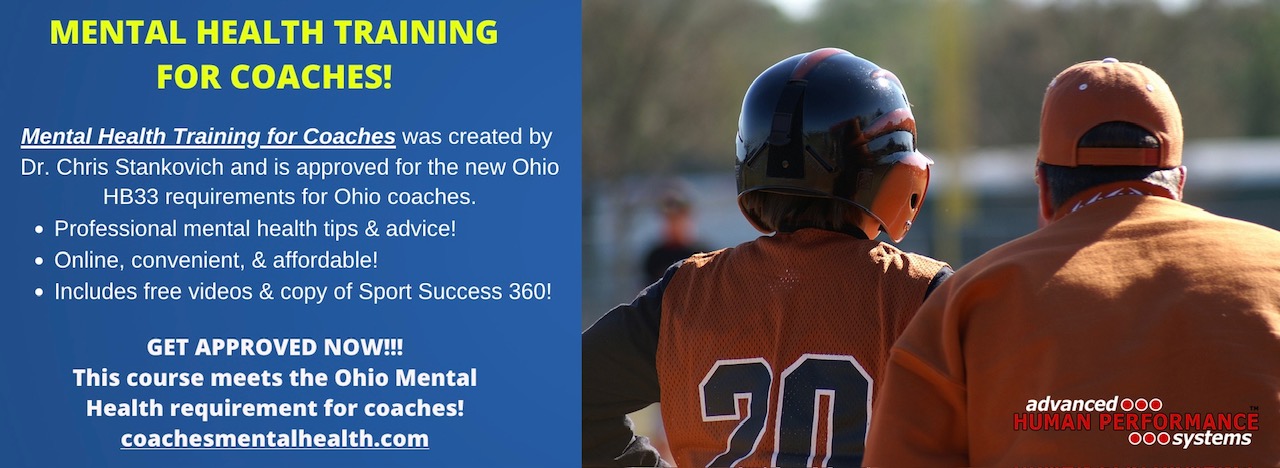

The professionalization of interscholastic sports
Today’s youth and interscholastic sports often mirror what we see in college and pro sports — nice, new training facilities and sport venues, field turf, state-of-the-art weight rooms, and branding and social media at every turn. In fact, in nearly every state today high school student athletes are permitted to cash in on Name, Image, & Likeness (NIL) money, just like college athletes. While there are a lot of similarities between interscholastic and college/pro sports, there are some really big, important differences that need to be recognized in order to better protect kids.
- These are kids. It is shortsighted to assume kids can handle the same sport and life pressures that college and pro athletes experience, and this is especially true when it comes to how kids identify and cope with stress. Expecting kids to compete vigorously year-round in an experience that feels more like a serious job than it does a fun sport experience really puts kids in vulnerable situations, and many struggle with mental health issues as a result.
- Their role is not that of elite athlete. While most pro and elite college athletes self-identify as “athlete” (often exclusively), most kids do not self-ascribe in this way. In fact, unlike adult athletes, many kids play sports simply because they are good — but they are not necessarily married to this role. This disconnect in assumption can leave kids in a real bind when they just want to play sports for fun, while others see them branded as “athlete.”
- They rarely have a say, and this can lead to distress. For many kids, they don’t have a lot of say in their sport experience — mom and dad sign them up, pay for extra training, and if the kid is good they can deeply invest in youth sports. When kids feel as though they don’t have a say it can lead to a lot of distress, and without support it can lead to isolation, depression, anxiety, and even self-harm.
- Resources are tough to find, especially alone. When kids feel as though they can’t ask for time off, or feel stuck that they can’t quit sports for fear of letting important people down, they often struggle trying to figure it all out on their own. Parents are usually the best place to start for a kid dealing with a problem, but how can you go to mom or dad when they are the ones with big sport expectations?
- Youth and interscholastic sports simply aren’t D1 or pro sports, nor should it feel like that. Lets be honest, while it’s cool to see youth and interscholastic sport improve with the times, many people still like the innocence and organic nature of school and community sports. The fact of the matter is that no matter how many games you add to a travel schedule, it is not professional sports — nor should it be. Instead, allow kids to grow, laugh, struggle, and fail, as it’s the life lessons learned and the friendships gained that are the true rewards of youth and interscholastic sports.

Final thoughts
While all kids are vulnerable to mental health issues, student athletes experience some very unique stressors that are sometimes overlooked. The sport intensity, personal identity, expectations from others, and social media implications are a few examples of issues and challenges young athletes face, and often struggle when trying to find help. Remember, by far the #1 reason why kids play sports is to have fun, so it is our job as adults to help create the type of experience kids most desire. Another part of our job as adults is to make sure kids are safe, not just physically from things like concussions and ACL’s, but also their mental health and helping them respond to stressors in healthy and effective ways.
drstankovich.com